From Autistic Masking to Resiliency and Self-Awareness

We’ve all taken personality tests in some form or another. During my career, I’ve taken DiSC and Myers-Briggs more times than I can count, often multiple times within the same organization. Something I have prided myself on is that every time I take one of these tests, I get an entirely different result.
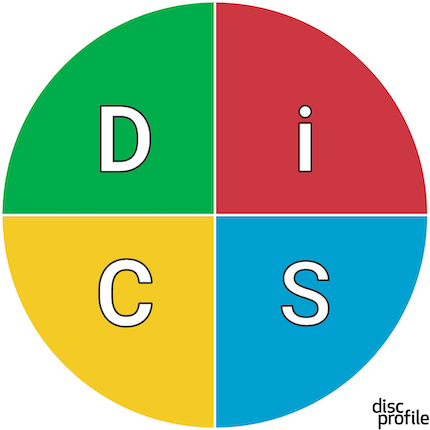
One time, much to the frustration of the HR person providing the assessments, my DiSC profile (meant to determine Dominance, influence, Steadiness and Conscientiousness, represented by the letters DiSC or by colours green, red, yellow, and blue, respectively) came back as a straight line. All of my colour areas were completely equal. Other times, I’ve skewed completely one direction, and then another the time after that. This is never a surprise to me, but it does seem to weird out other people.
Years ago, I was diagnosed with being on the autism spectrum. It is one of the least interesting aspects of me, but it did help put many things into perspective. One of the ways I—and many autistic people—show up is by “masking.” Autistic masking is basically the conscious or unconscious suppression of autistic traits to appear neurotypical (read: normal) and gain social acceptance. Growing up, this “camouflaging” greatly involved mimicking others’ behaviours. I would stand in front of the mirror and literally practice what I might say in different scenarios, how I would say it, and try to make it sound like others around me or in pop culture did. A friend of mine once told me he hated how I was able to fit into so many different social groups in high school. What he didn’t realize was how much work that actually was, and that I wasn’t really allowing myself to be me.
Fast forward past several awkward years, during which I got to know myself and entered the workforce. What was once a skill earned for acceptance has now become one used for self-awareness, resilience and continuous growth. With every new team or organization I join (with some intentional exceptions), I attempt to learn the norms, understand the people, empathize with others, and intentionally grow.
I came from a small town where I encountered many small-minded people. I encountered a lot of racism, sexism, intense homophobia, other prejudices, and just a general lack of awareness of the world that I wanted to escape, even from an early age. I have come to recognize where my opinions and beliefs held me back because I was too stuck, too resistant, too unaware and under-exposed to the world around me. A mix of autistic traits as well as cultural ones from where I was raised—traits that I didn’t want to hold me back.
Where it would once quite literally cause me physical pain to go off-routine, I began to switch things up intentionally. I would say yes to things I knew I would hate; I’d walk home a different path, hang out with people that made me uncomfortable, change which wrist my watch was on, and do anything and everything I could to make my brain more malleable. But now it wasn’t to fit in. It was because I wanted to be the best person I could be—someone who didn’t jump to conclusions and was open to changing their mind. Someone who may have strong opinions and beliefs, but they were loosely held.
When I receive feedback on my performance or character, I genuinely want to reflect and improve. Every time I do a personality test, like DiSC or Myers-Briggs, I don’t use it as a label to say “I’m X.” Instead, I use it as a temperature check and ask myself, “Is this who I want to keep being? And how will these traits help me achieve what I want to?” And instead of seeking social acceptance in each new group, I ask myself if the people I am surrounded with are those I truly want to sponge from.